Looking to Sell or Let?
Begin your journey with a free property valuation. Get the facts and figures to make informed decisions.
Property Valuation
"*" indicates required fields


British architectural design has taken on many different styles and enjoyed many new trends over the years – some with more staying power than others – and many of which still have tremendous appeal even today.
In our period property style guide, we will be exploring some of the most prominent and iconic architectural designs from Tudor and Georgian to Victorian and Edwardian.
1485-1603

Image from thisismoney
The Tudor period at the latter part of the Medieval era between 1485 to 1603 saw an iconic style that produced some of the most quaint and beautiful historical properties available.
Original Tudor homes were typically quite small and used a wooden structure that would not be able to support a contemporary construction. Tudor buildings are easy to spot though, with exposed beams, pitched thatched roofs, low doorways, gable roofs, multiple chimneys and half-timbering.
The Tudor style saw a revival in the 19th century which meant that many properties across the UK were built in ‘mock Tudor’ style. Do remember though, that Tudor homes were typically built in small clusters, so if you see a standalone Tudor style property, it is more likely to be mock Tudor.
1714-1830
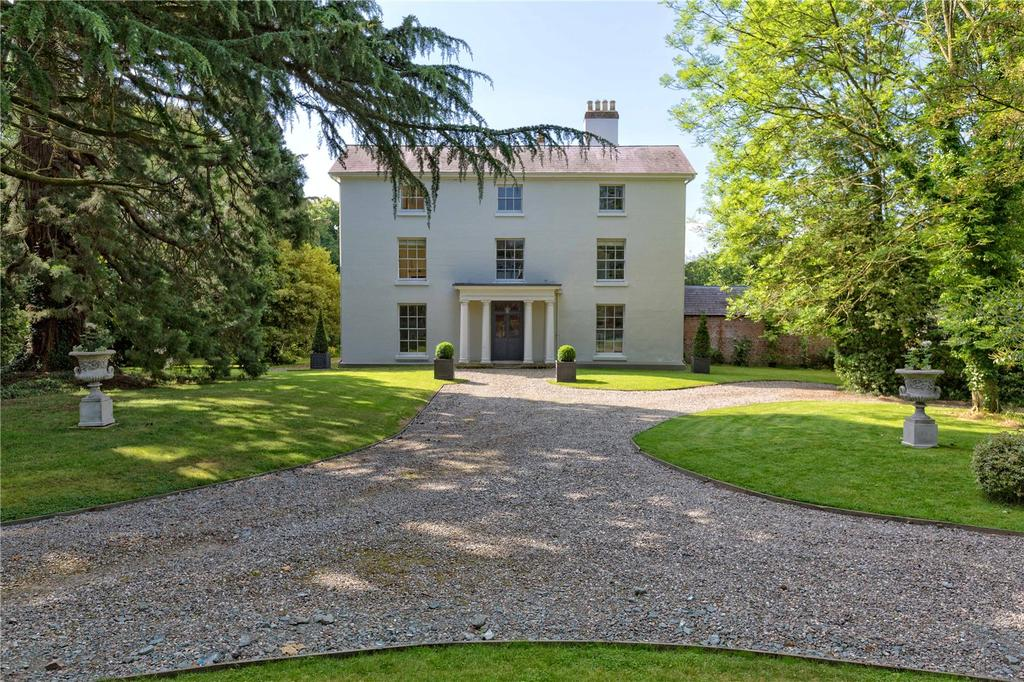
Image from countrylife
In sharp contrast to the design styles that came before this era, properties were built with a different approach to create a sense of light and space that was not found in the dark, smaller properties of bygone eras.
Georgian built properties are usually characterised as those built between 1714 and 1830. However, such a long time-frame means that there are some variations in style. Still, the overarching design features of symmetry and proportion remain a constant feature, and this is because simple mathematical practices were applied to determine the size and shape of the windows and the rooms as a whole.
There are two sub-divisions of Georgian architecture:
Many properties in this period did not have their own garden, so instead would be built around garden squares.
Another notable feature is the sight of the occasional bricked-up window. This means that at some point the window tax had been levied on the homeowner, which meant that the more windows a home had, the higher taxes would need to be paid.
To get around this, some homeowners bricked up windows, many of which were never reinstated after the tax was lifted.
1837-1901
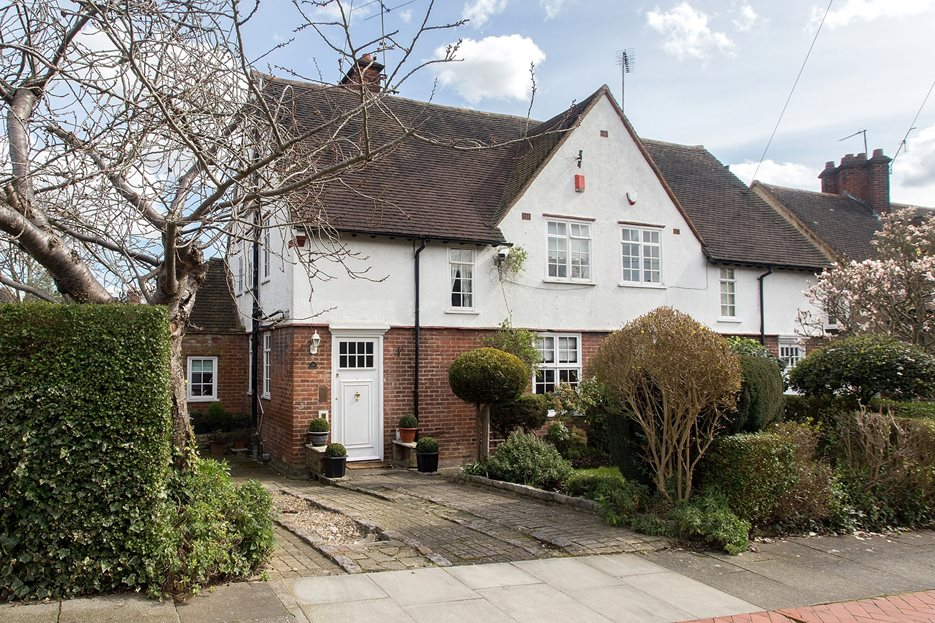
Image from Portico
The Victorian era was a time of mass property construction and increasing wealth. Where previously only the higher class had been able to own a property, wealth became more evenly distributed in the wake of the industrial revolution and demand for homes soared.
The era saw the building of the terraced homes we see built along narrow streets. While terraced dwellings were also built in Georgian times, the Victorian era properties of this type were smaller and only one room wide.
Victorian homes are easily identifiable through their coloured brickwork, stained glass windows (particularly set within the original front doors), traditional fireplaces and geometric tiled halls.
There are a few differences in the build quality between early Victorian properties and those built later. This is because over time, development companies became far more efficient at building more quickly.
These days it is entirely possible to find many original Victorian features still present in properties, particularly in homes that have been cared for properly over the years. Having said that, even if those features are lost over time, it is still very possible to restore them using contemporary materials to mimic the characteristics of the period.
1901-1910
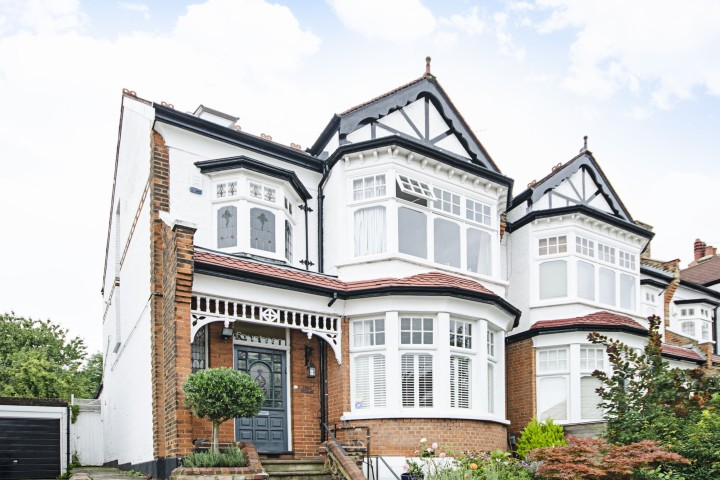
Image from foxtons
In comparison to the Georgian and Victorian periods, the Edwardian era was much shorter in length, and in opposition to the mass production seen across the Victorian era, the Edwardian age saw a growing interest in homemade products and the skills needed to produce them.
Due to the magnitude of building that had been undertaken throughout the Victorian period, Edwardian developers turned their gaze to suburban areas. Therefore, Edwardian homes are far more spacious with both a front and back garden.
Edwardian homes are usually distinguished by their bright red brickwork, and perhaps mock Tudor cladding and wooden porches. The Edwardian aesthetic style was far more simplistic compared to that which had come before, with less decorative internal design, and new features such as parquet flooring.
Many love the thought of living in a characterful period property, and it’s easy to see why. However, if you do choose to purchase a new, old home, it is best to be prepared from the outset.
By virtue of their age, older homes were not built to the same specifications of the rectangular, open-plan new builds we are used to seeing these days. And you may find that a house like this comes with its own peculiar set of traits and quirks, since no two houses were built the same.
Of course, none of this is intended to put you off purchasing a period home, but it’s undoubtedly best to come prepared.
In fact, at King West, we love period properties, so if you’re considering one for your next move, then don’t hesitate to contact us today to take advantage of our range of expertise and services.
Begin your journey with a free property valuation. Get the facts and figures to make informed decisions.
"*" indicates required fields
Want to discuss something more specific? Contact us, and we will be more than happy to help you.
"*" indicates required fields

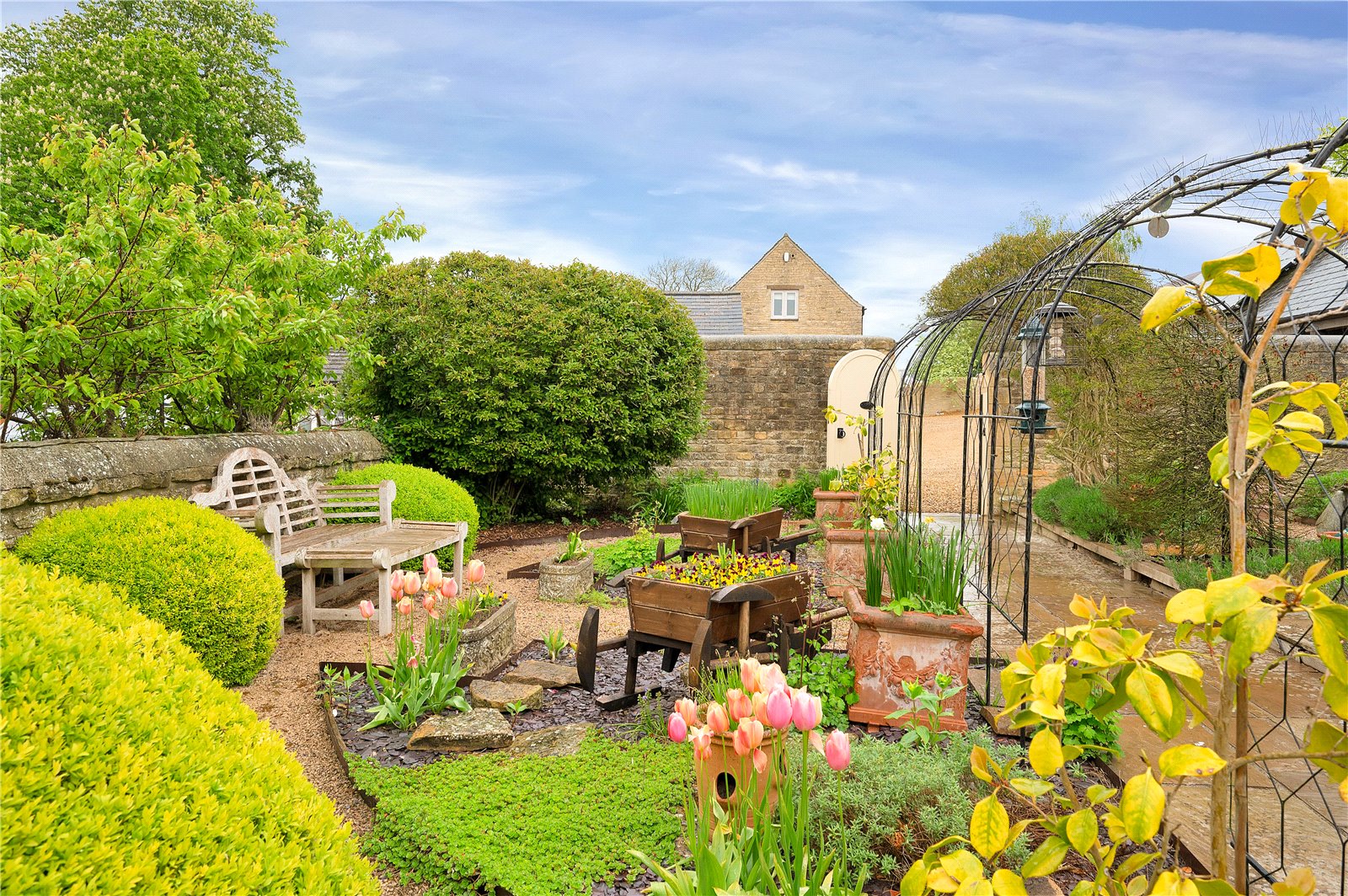
Spring is a time for activity and renewal, bringing new vitality that can significantly impact the market for residential properties in the
Article Summary: Key Trends and Predictions for the UK Property Market in 2025 As 2025 gets underway, the UK property market stands

At the end of October, Chancellor Rachel Reeves unveiled Labour’s first budget in 14 years – what was undoubtedly a notable o...


We have just sold and completed a move into our new home, with the help of Lois and Ellie who have been excellent throughout the process, keeping us informed of progress and always being available when we needed them. I would have no hesitation recommending K...

nusaiba 2026
Kunal Dattani
Rowan Lawton
Tricia Lewin
Simon Allen
Lucy Sidorowicz
David Oakman
Charlotte

|